The screen lit up to show a
photo - slightly unfocused - of hermit crabs. My class had examined plenty of
hermit crab photos, identifying the shell, abdomen, claws and so on, and done
so with little fanfare. This latest photo had a very different effect. Within
minutes of viewing this photo the class had sprung into action, turning our
classroom into a laboratory. What made this photo so motivating? This photo had
context for us.

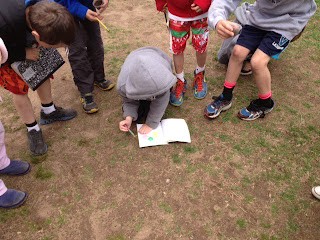
My colleague John Otterstedt (working at a school across town) and I decided to link our 3rd grade classrooms over a social network. We wanted to see how well we could connect beyond the building (when even connecting within a building has it’s barriers). The hermit crab photo they sent was of a student-designed experiment. What was clear in this blurred image was that the class had set up mazes for the crabs to explore. Their note to us explained the objective; to measure crab intelligence and speed.
That’s all it took. Seeing what those other scientists were doing, and having direct communication with them, was highly motivating. My students had gone from looking at hermit crab photos with compliance to looking at a photo with true engagement. They worked together to respond with their own experiment.
Being in a classroom can seem like a cloistered experience. This might be attributed to the physical structure of the school building, class size, routines, subject compartmentalization, etc. A social network allowed us to circumvent some of these things that we might otherwise use as excuses… excuses to remain cozy in our classroom’s shell. In this case, reaching out across the district might have been just as easy, if not easier, than within the school walls.
I felt lucky to be partnering with John. I’m finding that the people who are willing to collaborate and share their classrooms have something worth sharing… I’m betting that everyone does, it just takes a little risk to reach out and share that with just one other group.
This example is one way I’ve been working to find student-centered moments. While we might strive to create a student-centered classroom, I’m finding that a focus solely on the physical space and schedule structures has its limits. Spending more time building student relationships to their topics and interests when the opportunity arises is important.
To continue this exploration, I worked with two colleagues in my school to build a collaborative relationship. Kevin Blois (5th Grade) and Chris Kearns (1st Grade) look to create projects and/or collaborate on just about anything. I think we share a belief that the student interaction has deep value and we’ll take it any chance we get.
We’ve worked with our students to create and maintain a school-wide recycling program, composting program, wellness initiatives and a recent monthly meet-up between 5th, 2nd and 1st graders. We can always find limits to this work in the structures of schedule and physical space, but we reach out anyway and share the smaller moments, even if it’s for a class period or less. These quick connections have made for some powerful student experiences. Kevin explains that part of this work is about having fifth grade students develop an understanding of their best practices. This leads to deeper meaning and connections about their process. Here are some of the tools and experiences we’ve set up to foster this approach.
Beyond Book Buddies
We do love having near-peer
groups get together to read. We looked at this and decided to offer more varied
opportunities for kids to connect and learn across grade levels. While our
latest focus has been science partnerships, we’ve looked to partners in other
areas. So, step one, get the peers and near-peers together on any topic. We do
this on a regular basis, for a small part or all of a subject block. This can
be to share together, listen together, experience together, even if it’s
something simple or small. In partnerships the small things can grow.
Kevin guides the fifth graders to use these moments to teach from their best practices. He sees this creating the foundation for academic risk-taking, leading to ownership and a deeper understanding of the content. Chris’s first graders and my second graders benefit from the guidance of fifth graders who give them special attention that seems to be reserved for peers and near-peers. We have seen the fifth graders exhibiting an intensified ownership and excitement about their work.
Kevin guides the fifth graders to use these moments to teach from their best practices. He sees this creating the foundation for academic risk-taking, leading to ownership and a deeper understanding of the content. Chris’s first graders and my second graders benefit from the guidance of fifth graders who give them special attention that seems to be reserved for peers and near-peers. We have seen the fifth graders exhibiting an intensified ownership and excitement about their work.
The opportunity to take on a teaching/leadership role brings out a natural
passion for their work because they have a deeper vested interest - it is theirs
to share. The first and second graders naturally have child-like excitement
for science work, but working with peers it takes on a new focus through
questioning and working with the more experienced student scientists.
Who Do You Know?
Both Kevin and Chris have
close relatives with jobs in the sciences. Using Google chat as well as live
visits we’ve been able to get kids talking to scientists in the field. This
energizes their science work when there is a larger group of students with a
common experience to draw upon, discuss and refer to. Skype education offers
opportunities to collaborate if you don’t find someone locally… if you ask
there is someone with insights to share. Parents are often a great resource for
coming in to answer questions and share about their areas of expertise.
It’s
Not About the Content
While 5th grade is working
on ecosystems, the second graders are focused on life cycles or
chemistry-related topics. While not having direct alignment would seem like a
reason to suggest we wouldn’t link up, it actually has been very effective to
have students share and teach near-peer groups in whatever topic they are
studying. For one, much of the science we teach is connected to the scientific
method and keeping notes on their work. This focus is a part of any science
lesson (I’d venture to guess scientific method is central at every grade level
and beyond). Partnerships also allow students to take leadership roles to teach
other scientists about their work. Through this, we begin to see the links that
enrich our understanding and see where ecosystems and life cycles merge.
Peers
as Teachers
My colleagues and I often
comment on the social interaction that occurs in collaborative moments. This
creates a focus and a level of interest that is strong and sustained. While
we’d consider ourselves quality teachers, there is something that these kids
are able to offer each other, beyond what we’ve planned for, that we could
never teach them ourselves. It is in this connection that they listen in ways
we might not be able to offer as teachers. This confirms my desire to get out
of my students’ way as often as is appropriate, setting up the environment for
them to take control of the experiences, relationships and the struggle of
their learning lives.
Tweet
My students and I share
photos and links and microblogs of the things we’re up to. Using twitter you
can send these things directly to other classes, authors, and anyone else using
the service. It’s been a useful way to share some of our moments. Twitter
allows for quick contact between classes, working on each others' questions,
sharing photos, etc. It has also been a way to look back and review some of the
things we’ve been exploring. Other tech tools like blogs can help here too.
Follow and chat with us on Twitter @2altieri
For the next endeavor I’d like to explore the link between high school and elementary age students. We’ve had success with the high school environmental group coming to offer support to our environmental group, the Green Ambassadors. Having more regular connections could create that context for our learners and bring more of that deep social learning only kids can offer to one another. If you are one of those people ready to make that connection, let me know. We all need help coming out of our shells. I guarantee that it’s worth the risk.

This post was written by John Altieri, second grade teacher at Willard School in Ridgewood, NJ.
Email him at jaltieri@ridgewood.k12.nj.us.